
The Complete Guide to Wild Chiltepin Pepper
Comprehensive guide to wild chiltepin: botanical origin, distribution, Scoville heat, harvest, culinary uses, indigenous history and why it is the oldest chile in Mexico.
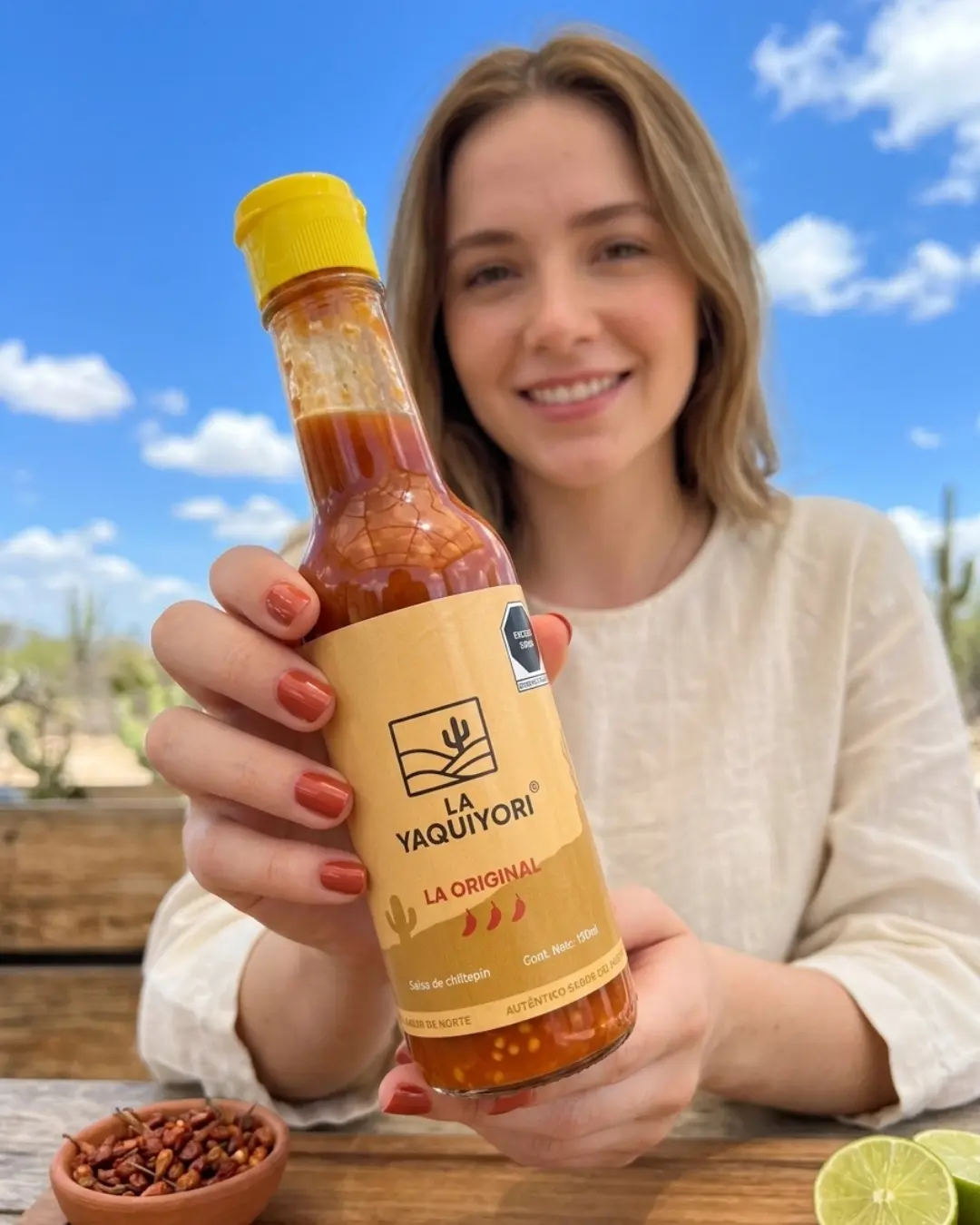
Wild chiltepin (Capsicum annuum var. glabriusculum) is the oldest chile in Mexico and the wild ancestor from which all cultivated chiles descend — from jalapeño to habanero. This guide covers everything you need to know: origin, biology, heat, harvest, history and uses. The reference we will cite from every other post on this blog.
1. What exactly is wild chiltepin?
Chiltepin belongs to the Solanaceae family and specifically to Capsicum annuum, the same species that produces jalapeño and poblano. The difference is the variety: "glabriusculum" designates the wild, undomesticated form that grows naturally in northwest Mexico and the southwest United States.
Visually it is unmistakable: small (5-8 mm in diameter), round and almost spherical, bright red when ripe. Its size earned it the name "flea chile" — from the Náhuatl "chiltecpin" (chil = chile, tecpin = flea).
2. Where does it grow?
Wild chiltepin grows in a specific belt: northern Sinaloa, Sonora, Chihuahua, southern Arizona, New Mexico and Texas. Its ideal habitat is the slopes of the Sierra Madre Occidental between 200 and 1,500 meters elevation, under partial shade of nurse trees like amapa, torote, mauto and mesquite.
It needs a very specific microclimate: extreme day-night temperatures, rocky well-drained soil, seasonal humidity (rainy summer, dry winter), and seed-dispersing birds. Birds eat the fruit, disperse the seeds, and the cycle continues. Without birds, no wild chiltepin.
3. Why "the red gold of Sonora"?
The "red gold" nickname has real economic basis. In season (September-November), a kilogram of dried wild chiltepin exceeds $2,000 MXN in regional markets. Off-season, it reaches $3,500-$4,000 MXN/kg. Compared to other dried chiles ($150-300/kg), it is one of the most expensive ingredients in Mexican cuisine.
The price reflects: difficulty of habitat access, mandatory hand-harvest (no machinery exists), low yield per workday (2-5 kg/person/day), growing demand in gourmet cuisine, and biological limits (cannot be industrially cultivated while preserving the wild profile).
4. Heat: 50,000-100,000 SHU
On the Scoville scale, wild chiltepin sits at 50,000-100,000 SHU. For context: jalapeño 2,500-8,000, chile de árbol 15,000-30,000, habanero 100,000-350,000. Chiltepin is in the "medium-high to high" range — genuinely spicy, but not extreme.
What is distinctive is the character of the heat: explosive and immediate, but short-lived. Chiltepin's capsaicin hits hard at the start of a bite and fades in 30-60 seconds, much faster than habanero or serrano. That is why "it stings nicely without hurting" — a common phrase in Sonora.
5. Flavor profile
Beyond heat, wild chiltepin has a complex aromatic profile: fruity notes (citrus, red fruit), a natural smoky touch, and a vegetal acidity reminiscent of green tomato. This complexity is due to its wild growth — water stress and ecological competition concentrate aromatic compounds that cultivated chile does not develop.
This is why wild chiltepin can be used as a single ingredient (single-varietal) in a sauce: it has enough complexity on its own. Industrial sauces that blend chiltepin with árbol or guajillo do so because cultivated chiltepin has flatter flavor.
6. Harvest and season
Chiltepin fruits once a year. The plant flowers during the Sonoran summer rainy season (July-August), fruits ripen September to November, shifting from intense green to bright red. That is the exact moment harvesters head to the Sierra.
Harvest is always manual and plant-by-plant. An experienced harvester knows the best trees, the most productive corners of the Sierra, and the difference between an optimally ripe chile and an over-ripe one (which fades fast and loses potency).
7. Indigenous history
The Yaqui (Yoreme) and Mayo peoples of Sonora have harvested chiltepin for at least 9,000 years per archaeobotanical evidence. The Cahíta name for the chile is "kókoi" and the Comca'ac (Seri) call it "haxöl ipápjö" (chile of the ants). The name "chiltepin" we use today is Náhuatl, imported through contact with Mesoamerican groups.
Traditional uses went beyond cuisine: medicine (poultices for joint pain), digestive infusions, ritual use in ceremonies. The transmission of harvest knowledge — which trees, when, how to process — is still generational in indigenous communities of the Yaqui, Mayo and Fuerte rivers.
8. Culinary uses
Chiltepin has four main forms in cooking:
- Fresh whole: crushed in a molcajete with salt over grilled meat or fish.
- Dried whole: sprinkled over beans, stews, or finished dishes.
- Dried ground: as seasoning in spice blends or salts.
- In bottled sauce: like La Yaquiyori — artisanal process with vinegar, water and salt.
Classic Sonoran pairings are: raw seafood (aguachile, ceviche, oysters), grilled meats (skirt steak, ribs, chicken), cocktails (michelada, bloody mary), snacks (esquites, potatoes, chicharrón), and breakfast (huevos rancheros, machaca with eggs).
9. Differences with confusable chiles
Chiltepin is often confused with three similar chiles:
| Chile | Shape | Size | Heat (SHU) | Origin |
|---|---|---|---|---|
| Wild chiltepin | Round | 5-8 mm | 50k-100k | Sonora wild |
| Chile piquín | Oval/elongated | 1-2 cm | 30k-60k | Northeast cultivated |
| Cumbari/cumari | Small oval | 5-10 mm | 50k-100k | South America wild |
| Tabasco | Cone-shaped | 3-5 cm | 30k-50k | Tabasco cultivated |
10. Why choosing real wild chiltepin matters
In today's market there are three categories: (1) industrial sauces that blend chiltepin with cheaper chiles, (2) sauces with cultivated chiltepin from plantations that lose the wild profile, and (3) artisanal sauces with 100% wild hand-harvested chiltepin.
The difference shows on the first bite: aromatic complexity, clean heat that fades fast, absence of artificial flavors (dominant vinegar, colorants, stabilizers). If you have never tried it in its pure form, it is worth knowing at least once.
At La Yaquiyori we use exclusively 100% wild chiltepin from the Sierra of Sonora, hand-harvested by local families. The sauce is single-varietal: the only chile in the recipe is chiltepin. No shortcuts, no blends.
Related reading
Try wild chiltepin in its purest form
Pack Parrillero and Reserva de la Sierra available with discount.
Shop now