
How Wild Chiltepin Is Harvested in the Sierra of Sonora
The artisanal harvest of wild chiltepin in the Sierra of Sonora — tradition, challenges, and why the red gold of Mexico is so valuable.
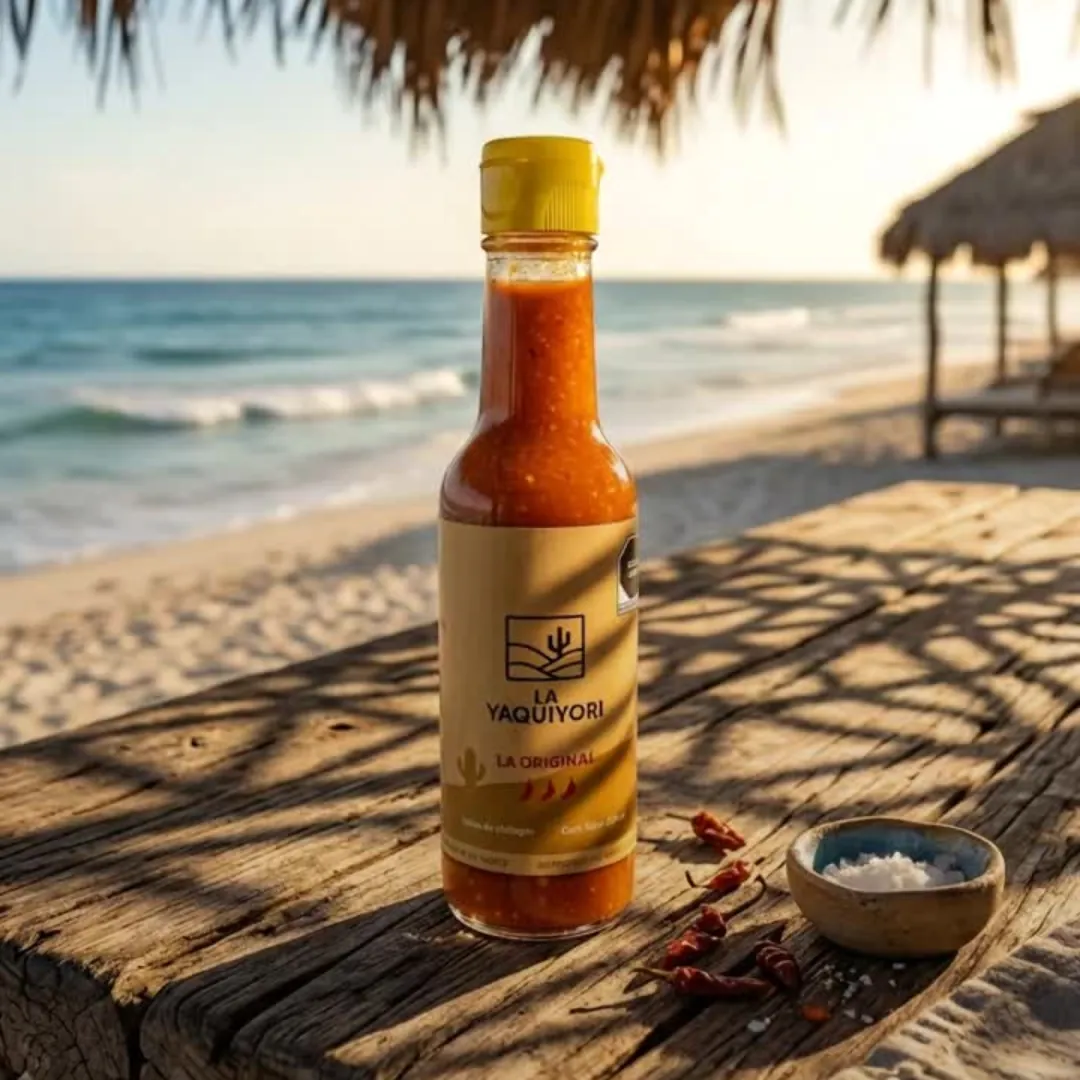
Every bottle of La Yaquiyori begins its story in the deep mountains of Sonora, where local harvesters hand-pick wild chiltepin between September and November. It is a process that has not changed in centuries — and it defines the character of our sauce entirely.
The chiltepin season
Wild chiltepin fruits once a year, during the Sonoran summer rainy season (July–August). The fruits ripen between September and November, shifting from intense green to bright red. It is at that exact moment of ripeness when harvesters head into the Sierra for the harvest.
Hand-picked: the only way
There are no machines for harvesting wild chiltepin. The plants grow scattered under the shade of nurse trees like amapa, torote and mauto, on rugged terrain that is difficult to access. Each fruit is picked individually with the fingers, taking care not to damage the plant so it keeps producing year after year. An experienced harvester can gather 2–5 kilograms in a full day of work.
The chiltepin ecosystem
Wild chiltepin depends on a specific ecosystem to thrive. It needs the partial shade of nurse trees, the rocky soil of the Sierra, extreme day-night temperature swings, and birds that disperse its seeds naturally. Trying to grow it outside this environment results in plants that produce fruit with less potency and aromatic complexity.
From field to bottle
Once harvested, chiltepin is carefully sorted to remove damaged or unripe fruits. The chiltepines are sun-dried in the Sonoran sun or processed fresh, depending on the recipe. At La Yaquiyori we process chiltepin artisanally in small batches to ensure each bottle has the consistency and flavor that defines us.
Why is it so valuable?
The combination of limited seasonal harvest, exclusively manual collection, hard-to-access terrain and growing demand makes wild chiltepin one of the most expensive ingredients in Mexican cuisine. A kilogram of dried chiltepin can exceed $2,000 MXN in season — and significantly more outside of it. That is why it is known as the red gold of Sonora.
When you hold a bottle of La Yaquiyori, you hold the result of a century-old tradition, the manual work of Sonoran harvesters, and an ingredient that cannot be replicated industrially. That is what makes our sauce truly artisanal.
Try wild chiltepin in its purest form
Pack Parrillero and Reserva de la Sierra available with discount.
Shop now