
La Yaquiyori vs. Other Chiltepin Hot Sauces: 6 Differences That Matter
A practical comparison between La Yaquiyori and other chiltepin hot sauces on the shelf. Ingredients, bottle, origin and spiciness - what to look for before you buy.
By Julian Orozco, founder of La Yaquiyori
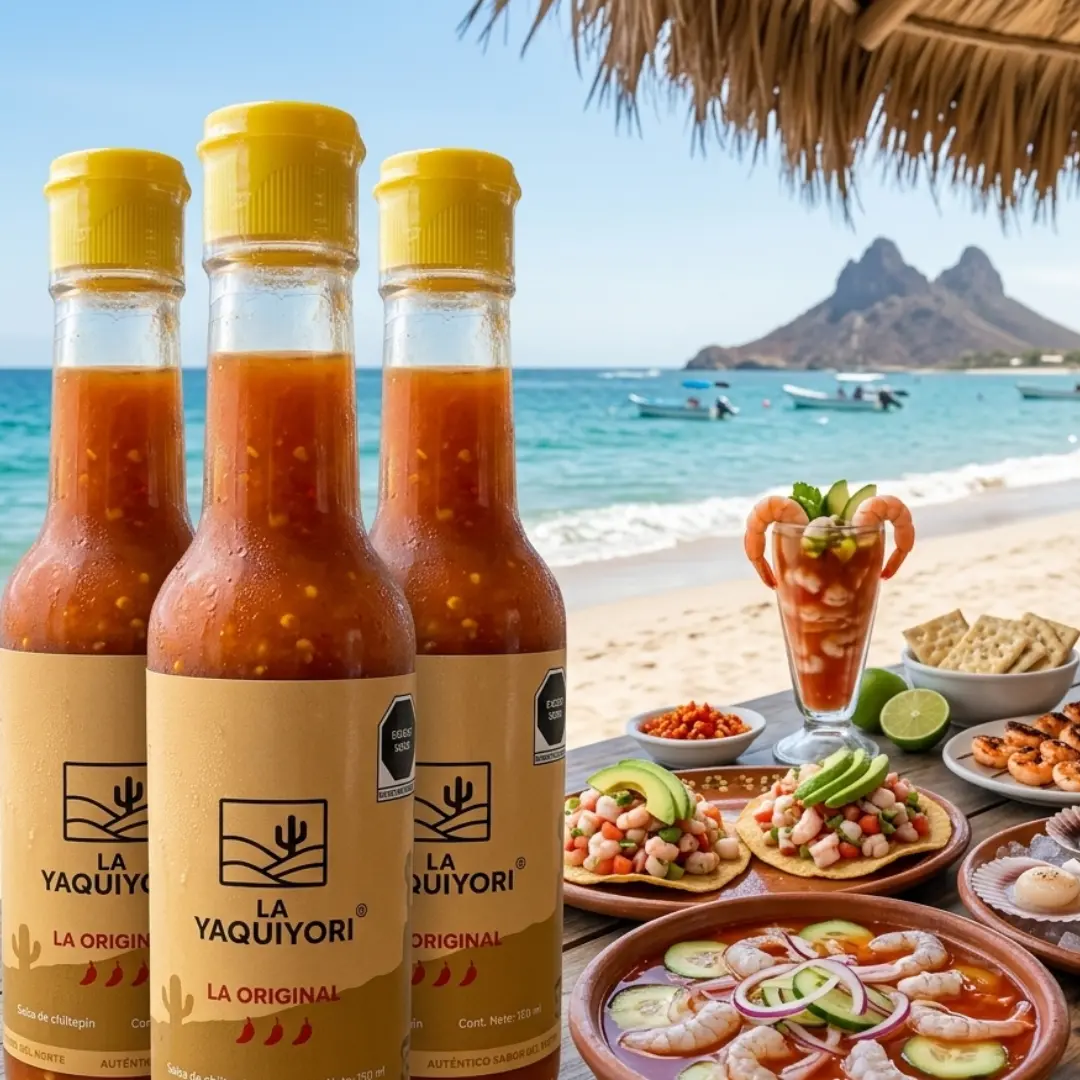
Chiltepin has become a selling name. It shows up on labels of very different sauces: some authentic, others using the word as decoration. This comparison puts La Yaquiyori side by side with the rest of the chiltepin sauces on the shelf - without naming brands, because the goal is not to attack but to give clear criteria for choosing.
The comparison at a glance
| Criterion | La Yaquiyori | Other chiltepin hot sauces |
|---|---|---|
| Recipe type | Single-varietal: wild chiltepin is the only chile | Blends with chile de árbol, guajillo, habanero or extracts |
| Chile origin | Sierra of Sonora, hand-harvest declared | Origin usually omitted, or low-aroma cultivated chiltepin |
| Bottle | Inert glass, 150 ml | Plastic or thin glass without light protection |
| Ingredient list | 4 ingredients: chiltepin, water, vinegar, salt | 10-20 ingredients including dyes and artificial flavorings |
| Declared shelf life | 4 to 6 months (reflects real preservation) | 12 to 36 months, stabilized with additives |
| Spiciness profile | 50,000-100,000 SHU, clean and short | Heavy, earthy, lingering spiciness - hints at hotter peppers |
1. One chile, not a blend
The core difference is the single-varietal promise. La Yaquiyori is made with one chile: wild chiltepin from the Sierra of Sonora. Many sauces labeled "chiltepin" actually use chile de árbol or guajillo as the base and add chiltepin powder or extract to justify the name. The blend may be tasty, but it is not a chiltepin experience - it is something else.
How to verify: read the ingredient list. If it says "chiles" in the plural or names multiple peppers, it is not single-varietal.
2. Declared, verifiable origin
Wild chiltepin grows in very specific zones: the sierras of Sonora, Sinaloa, Chihuahua and parts of Arizona. La Yaquiyori openly declares that its chile comes from the Sierra of Sonora and is hand-harvested by local families. Other sauces omit the origin or describe it vaguely - which suggests cultivated chiltepin from plantations, which loses the wild aromatic profile.
3. Glass bottle, not plastic
Glass is inert: it does not react with the sauce's acidity nor transfer flavors. La Yaquiyori bottles in 150 ml glass. Sauces in plastic packaging tend to lose aromatic volatiles over time and can develop residual flavors - especially with products as acidic and spicy as chiltepin sauce.
4. Short ingredient list
La Yaquiyori's recipe fits on one hand: wild chiltepin, water, vinegar and salt. An industrial chiltepin sauce can list 10-20 ingredients, including dyes (FD&C Red 40, Yellow 6), artificial flavorings, stabilizing gums and extracts. Every extra ingredient is usually compensating for something real chile does not deliver.
5. Honest best-by date
Mexican food regulation requires a best-by date that reflects real product preservation. La Yaquiyori's label reads 4 months (in practice, the sauce remains optimal for up to a year if stored cool and dark). A sauce that claims 12, 24 or 36 months of shelf life is heavily stabilized with additives - which changes profile, color and aroma over time.
6. Signature spiciness, not brute force
Wild chiltepin has a very particular spiciness profile: 50,000 to 100,000 Scoville units that arrive fast, peak, and fade quickly. As they say in Sonora, "it bites nicely but does not hurt". A sauce that leaves a heavy, earthy, lingering spiciness usually has hotter peppers - habanero, manzano, or extracts - hiding behind the chiltepin name.
When to choose each kind of sauce
Not every chiltepin sauce on the shelf is bad - they are different products for different uses. An industrial blended sauce can work for casual cooking where you just want spice. A single-varietal artisanal sauce like La Yaquiyori makes sense when the chile is the star: aguachile, oysters, carne asada, michelada. The difference shows most clearly when there are few ingredients and the chile speaks for itself.
A practical pre-purchase checklist
- Read the ingredient list and count the chiles mentioned (should be one)
- Verify the chile origin (specific sierra, manual harvest)
- Prefer glass over plastic
- Be skeptical of best-by dates longer than 6 months
- Test the spiciness: real chiltepin arrives fast and leaves fast
At La Yaquiyori we meet each of these criteria out of conviction, not marketing. We believe wild chiltepin deserves to reach your table as it is: no shortcuts, no blends, in glass, with its origin printed on the label.
Related reading
- What is a single-varietal hot sauce? - The promise of one chile
- 7 hallmarks of an authentic chiltepin hot sauce - Label checklist
- Why is artisanal chiltepin hot sauce different? - Artisanal vs. industrial process
Keep reading
- Shrimp Aguachile with Wild ChiltepinAuthentic shrimp aguachile recipe with wild chiltepin hot sauce from Sonora. 25 minutes, 4 servings. Spicy seafood with clean citrus notes.
- Sonoran Carne Asada Tacos al ChiltepinCarne asada tacos marinated with wild chiltepin hot sauce, garlic and orange. 45 minutes, 6 servings. Authentic northern Mexican asado.
- Fresh Oysters with Chiltepin and LimeA minimalist recipe: fresh oysters with wild chiltepin hot sauce and lime. 5 minutes, 2 servings. Raw seafood with the red gold of Sonora.