
La Yaquiyori vs. Industrial Chiltepin Sauce: Which to Choose for Each Use
A practical comparison between artisanal La Yaquiyori and industrial chiltepin hot sauces: when each makes sense based on the dish, the budget and the palate.
By Julian Orozco, founder of La Yaquiyori
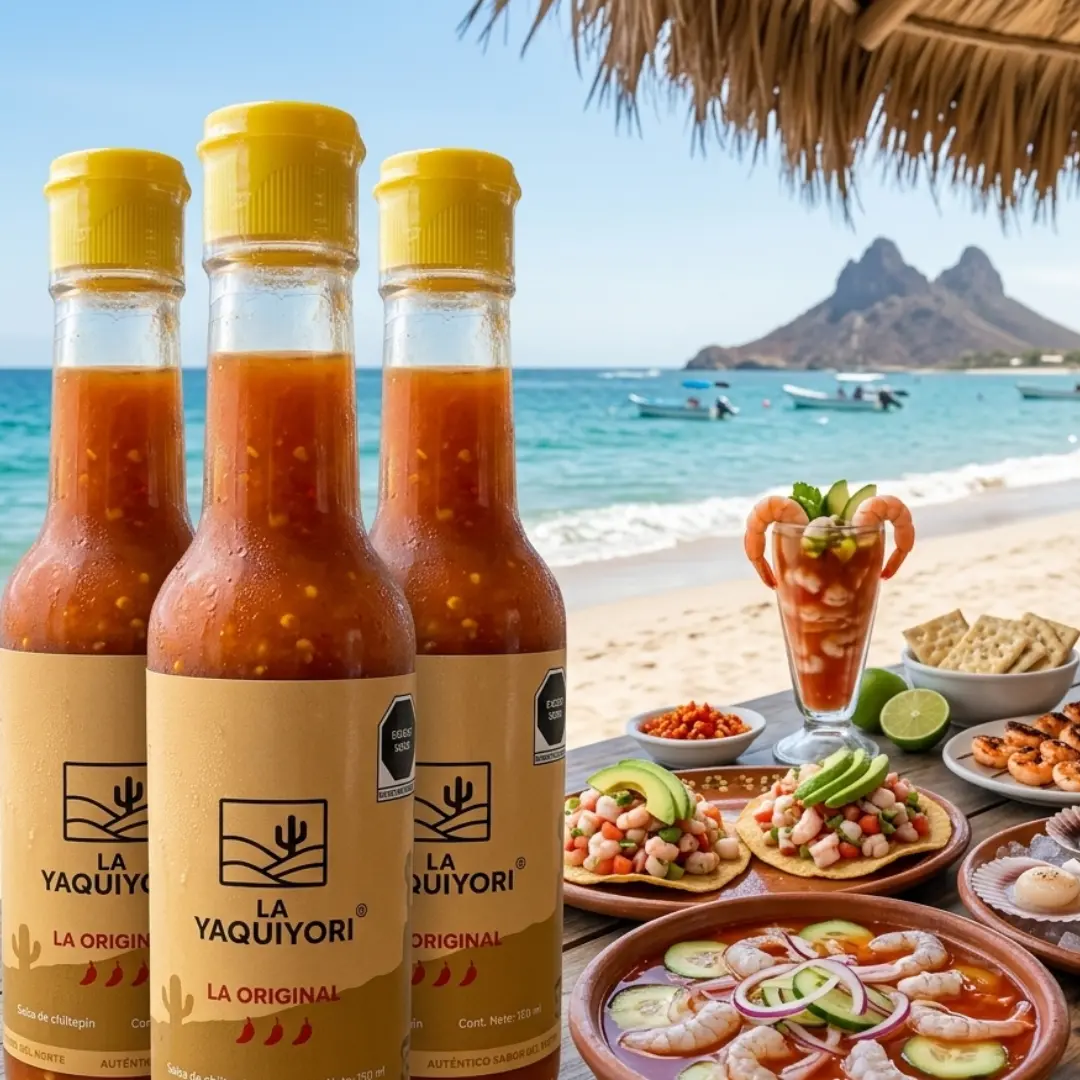
An artisanal chiltepin hot sauce and an industrial one do not compete directly: they solve different needs. This guide compares La Yaquiyori with the industrial sauces that share the shelf - without naming brands - so you can decide which makes sense for each use.
Use comparison
| Dimension | La Yaquiyori (artisanal) | Industrial chiltepin sauce |
|---|---|---|
| Production | Small batches, hand-supervised | Standardized industrial lines |
| Batch variation | Yes - reflects the year's harvest | Zero variation: stabilized with additives |
| Aromatic profile | Citrus, fruity, smoky depending on the batch | Flat, dominated by vinegar and additives |
| Price per bottle | Higher (wild chile + glass + small batch) | Lower (cultivated or blended chile + plastic + scale) |
| Best use | Seafood, meats, cocktails where the chile leads | Casual meals where you just want spice |
| Availability | Limited by the annual wild chiltepin harvest | Consistent year-round availability |
What actually changes between the two?
The difference is not only quality - it is purpose. An industrial sauce aims for uniformity and price. An artisanal single-varietal sauce like La Yaquiyori aims to express the chile in each batch - which means higher cost, lower volume and natural variation between harvests.
When an artisanal sauce makes sense
- When the dish has few ingredients and the chile is the star (oysters, aguachile, simple carne asada)
- When you want aromatic notes, not just spiciness
- When pairing with beer, mezcal or wine and need balance
- When it is a gourmet gift or part of a special dinner
- When you value knowing where the chile comes from and who harvested it
When an industrial sauce does the job
- For daily use on casual meals (tacos, soups, eggs)
- When the dish already has many strong flavors and you do not need chile nuance
- When budget is the priority
- When you consume sauce quickly and rotate bottles often
How to tell the difference on the palate
To feel the difference, try both on a clean dish: fresh oysters, plain grilled meat, or a simple lime aguachile. Put a few drops of each sauce on separate spoons. The industrial sauce will give you a flatter spiciness and a vinegar-dominated flavor. La Yaquiyori opens with citrus and fruit notes from chiltepin before the spiciness, and clears the palate quickly.
On price
La Yaquiyori costs more per unit because wild chiltepin is several times pricier than any cultivated chile, glass is more expensive than plastic, and small batches do not benefit from industrial scale economics. It is not a premium-marketing markup - it is what producing a sauce like this actually costs. The Grill Pack (3 bottles) and the Sierra Reserve (6 bottles) bring the per-bottle price down and usually include free shipping.
Summary
It is not "artisanal beats industrial" in the abstract: it is "each works better for different things". If the chiltepin is what you actually want to taste, a single-varietal artisanal sauce like La Yaquiyori earns the difference. If you just need a backdrop of spice for a quick meal, an industrial sauce will do. Having both in the pantry is not a contradiction.
Related reading
- La Yaquiyori vs. other chiltepin hot sauces: 6 differences - Criterion-by-criterion comparison
- Why is artisanal chiltepin hot sauce different? - The artisanal process explained
- The complete guide to wild chiltepin - Everything about the chile
Keep reading
- Sonoran Carne Asada Tacos al ChiltepinCarne asada tacos marinated with wild chiltepin hot sauce, garlic and orange. 45 minutes, 6 servings. Authentic northern Mexican asado.
- Fresh Oysters with Chiltepin and LimeA minimalist recipe: fresh oysters with wild chiltepin hot sauce and lime. 5 minutes, 2 servings. Raw seafood with the red gold of Sonora.
- Gourmet Pizza with Chiltepin Hot SauceGourmet pizza recipe with wild chiltepin hot sauce as base or finishing drizzle. 30 minutes, 4 servings. Chef-driven cooking with the red gold of Sonora.